

: A Simple Framework That Makes a Big Difference in Critical Moments
ABCDE Assessment 🩺
When a patient begins to deteriorate, every second counts. As nurses, we need a structured approach that helps us recognize early warning signs, prioritize our actions, and communicate clearly with the healthcare team.
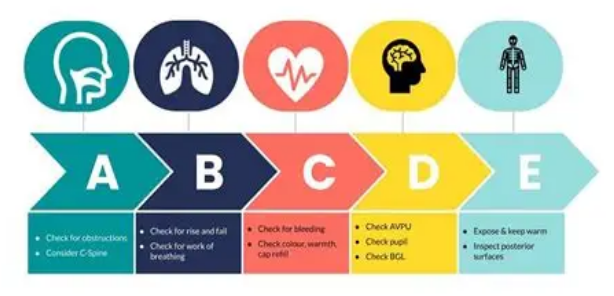
One of the most effective frameworks is the ABCDE Assessment.
A — Airway 🫁
Start by checking whether the airway is open and protected. Look for:
- Difficulty speaking
- Noisy or abnormal breathing
- Secretions or obstruction
- Snoring or gurgling
- Any signs of airway compromise
If the airway is threatened, intervene immediately and escalate for help.
B — Breathing 🌬️
Next, assess the patient’s breathing. Check:
- Respiratory rate
- SpO₂
- Work of breathing
- Chest movement
- Breath sounds
- Cyanosis
Remember: Normal SpO₂ does not always mean normal breathing. Always consider the full clinical picture.
C — Circulation ❤️
Evaluate how effectively blood is circulating. Check:
- Blood pressure
- Heart rate
- Peripheral pulses
- Capillary refill
- Skin color and temperature
- Signs of bleeding
- Urine output when relevant
Sudden changes may indicate early deterioration.
D — Disability 🧠
Assess the patient’s neurological status. Look at:
- Level of consciousness
- GCS
- Pupils
- Blood glucose
- New confusion or behavioral changes
- Seizure activity
E — Exposure 🔍
Perform a full-body assessment. Look for:
- Bleeding
- Rash
- Swelling
- Injuries
- Skin changes
- Temperature abnormalities
Maintain the patient’s privacy and warmth throughout.
Why ABCDE Matters ?
It’s more than a checklist — it’s a mindset. It helps you focus on life‑threatening issues first and avoid distractions. If you find a critical problem, treat or escalate before moving on.
💡 MIRAS Clinical Tip
Don’t JUST Assess — Reassess. After any intervention, go back through ABCDE and ask: Is the patient improving, worsening, or staying the same?
🤍 From MIRAS
Assess early. Act early. Escalate early.
A structured approach turns uncertainty into clarity.
Changes in mental status can be early warning signs.